I can’t wait to read about everything other Algebra 2 teachers are planning and doing in their classrooms! I thought it would be fun if we all blogged and then I could post a compilation of our blogs about once a month.
I would love for us to blog about how your curriculum is organized (sequence of topics). I think it would be great to see as it seems we are all usually teaching the same topics at about the same time.
Other great ideas for blog posts could be:
First day / first week activities
Goals for this year
Great icebreakers
Math class set-up
You don’t have to choose! If you go crazy and want to blog about all of them, please do! Submit every post to the form below and I will post them all! And don’t forget to tweet out your post with the #Alg2Chat hashtag. Also, if you are in a blogging frenzy, check out #MTBoSblaugust, and include that hashtag to your post as well! You don’t have to wait, you can get started now! 🙂
Join us on Twitter and even with blogging!
Please join us on Twitter at #Alg2Chat. If you aren’t on Twitter yet, now is a GREAT time to start. You will be amazed at the resources that will come right to you! Also, if you have always wanted to start a blog, do it! We have a great website, Exploring The MTBoS, that can help you with both!
Algebra 2 Math Chats (#Alg2Chat) Coming in September! Thursday nights at 9PM EST
Check out #Alg2Chat Thursday nights at 9PM EST, beginning in September. If you are interested in helping moderate, or have some great topics you would like to discuss, please tweet me at @jreulbach.
Click here to enter your blog post, or fill in the form below. 🙂
Check out these blogs from teachers who teach Algebra 2! If you teach Algebra 2, Pre-Calculus, Math 2, or Math 3, then please scroll down to add your blog to the list!
These are the blogs of the teachers who signed up to connect already. You can fill out the form at the bottom. I will add you to the list when I update this page (about twice a month).
Check out the #Alg2Chat hashtag on Twitter starting in September. We will be meeting Thursday nights, 9PM EST.
TMC16 this year intensely motivated me, to the point where I cannot stop thinking about math ed, even on vacation! I came up with this idea this morning, and have to get it down before I go to the beach so I will stop thinking about it, and relax!
If you are going to be teaching Algebra 2, please add yourself to the list below! I did this when I taught middle school, and it was great! I even was able to develop a monthly newsletter of resources for those who signed up. No promises, I have much ambition before school starts and then run out of time. But for the first time in two years, I am feeling my old momentum come swinging back! Hurrah! And thank you all for inspiring me!
I created a shared Google Folder for us to drop our favorite goodies in. How great will it be to have a place with ALL THE THINGS when we are looking for resources?! As a community, I know we can do this!
The #MTBoS (Math Twitter Blogosphere) is an amazing community of math educators who share ideas and resources freely with others through blogs and Twitter. It is a strong online community where we are constantly learning from one another and growing better, together.
Twitter Math Camp 2012
Twitter Math Camp (TMC), an amazing “grass roots” conference for teachers, by teachers, was born when we decided to finally meet in person five years ago in 2012. This initial small meeting of 37 teachers (#TMC12) has grown to a conference of over 200 in just five short years. I have been to all five, as it is the one conference that I do not miss, and it is one of my favorite experiences of the year!
I love Twitter Math Camp so much that I want to share it with everyone. And I want you to get to experience it, even if you couldn’t be there this year to experience it with me! Luckily, it is TWITTER Math Camp, so almost everything can be accessed online!
Here is your how to guide to virtually “attending” TMC16 online. The best thing is, you don’t have to decide which amazing session to attend (out of 12!) during each block, you get to read about them all! In fact, I will be virtually attending all 11 sessions every block that I did not get to attend because I was in a different session!
1) Search the #TMC16 hashtag on Twitter and read the tweets. You will find amazing quotes, pictures, and most importantly links to many of the great resources presented at the conference. Note: There are a ton of tweets so it will take a while to read through. In fact, there were so many tweets that #TMC16 was trending multiple times per day during the three-day conference. Additionally, since it is a Twitter conference, the teachers are constantly communicating with each other through Twitter, all using the #TMC16 hashtag. So you will see many tweets that are not resources as well.
2) Go to the Twitter Math Camp website. Here you can read more about Twitter Math Camp. After that, I would read the TMC16 Complete Program with Descriptions so you will know what sessions you want to learn all about. There are a ton of sessions so take notes! You will need them when you access the TMC Wiki to get the session materials (see #3). The Twitter Math Camp website will also contain the #TMC16 Archive, which is all of the videos recorded of the conference as well as many reflection blog posts by other teachers about the conference. Many math educators blog about their experience. These blog posts are excellent as several teachers will give specifics and details about each session to supplement the raw materials that you can find.
3)Watch the videos from #TMC16. (They are all not up yet, but will be). The keynote speakers and the “My Favorites” were recorded each day, plus a few extraneous moments. “My Favorites” are 5 – 15 minute mini-talks teachers give about a favorite thing from their classroom. The “official” videos were taken by Glenn Waddell. You can also watch the videos I took with Periscope. Periscope is fun because viewers can heart moments they love and write comments, all of which you can view when watching the replay of the video. I discovered that I could sketch on the video while people were talking! So, I had some fun with that too. I am working to put all of the videos in one place permanently, but haven’t had time yet. Also, I had never used Periscope before this conference, so my first videos are untitled and the orientation is vertical. Sorry! Thank you to Sam for showing me Scopedown so I could download all of my Periscopes before they disappeared! However, for some reason the orientation is all messed up when I downloaded it. Ugh.
4) Check out the Twitter Math Camp Wiki for the resources! The TMC wiki contains most of the materials from each of the sessions. It is packed with links, pdfs, and sometimes even the presenter slides! Bonus: It also contains all of the information from every Twitter Math Camp session since it was created in 2012. Be patient, as some presenters have not had a chance to upload their files. You can also tweet a presenter and I am sure they would be happy to send material to you.
FINALLY, once you are all done “attending” TMC16, you should share your #1TMCThing on Twitter. This is the ONE thing that you learned from TMC that you would like to implement this year. Please tweet it out, and don’t be shy! Think of TMC16 as an online school. You have earned your virtual certificate and should definitely tweet along with us. Because you are one of us. If you are still not convinced, here is Shelli’s tweet. She was not able to attend TMC this year, but followed the hashtag during while TMC16 was in session. She even discovered and shared her #1tmcThing. Missed you Shelli. ❤
Going forward, if you are NOT on Twitter, interacting with math educators, you should be. So sign up now before you miss any more of the amazing things math educators are doing there! I’ve grown more in the past few years than I have in my entire career. If you want to meet more of us, the MTBoS directory is a great place to start! Follow people on Twitter. Follow @TMathC. Follow me at @jreulbach. Say Hi to me! Ask questions! We will help you! Search hashtags and use hashtags when you tweet. It will be life changing.
Once again, I am in the wonderful world of #TMC16. These are my people. It is an overwhelming, exhausting, but most importantly exhilarating experience even for a seasoned TMCer like me (this is my 5th TMC). In fact, I am going to my family vacation to the beach one day last so I don’t miss the closing ceremony on Tuesday. I only get this experience once a year and can’t miss a moment of it.
I am doing Chris and Mattie’s “Talk Less, Smile More” morning session. It is amazing. Right now I am working with a group of Algebra 2 teachers to develop questions around quadratics. I will share it once we get something on it. We are having great discussions, and much laughter, together.
I saw a request on Twitter for Periscope so I decided to video some of the action here. I have never used Periscope so the first few videos are untitled, shaky, and turned the wrong way! But, I am getting better and hopefully sharing some of the TMC16 goodness with all of the wonderful math teachers that wanted to come but couldn’t this year.
Tracy Zager truly moved me with an inspirational keynote today. You need to watch this. Her well prepared talk was full of humor, math, and emotion. I adore her. I could not even believe that she added a Desmos Activity builder into her talk for 200 people after just learning it two days before. I loved everything that she had to say, and am going to be more intentional with vertical alignment. TMC has made me acutely aware of the need to vertically align mathematics education, and that we all need to play a part in this in order to affect change. I learned that it was important to close each class. This is something that I rarely do, and don’t know how to do effectively. After an SOS tweet, David Coffey sent me a link to “22 Powerful Closure Activities“. I love this community.
I went to Jonathan’s awesome session and sill have so many questions. We examined the standards (my group used a Wordle), watched Marble Races, were blasted with the inception button, and just absorbed Jonathan’s brilliance.
Everyday after the sessions, Sara Vanderwerf brings her backward bike for people to try. This is a very “feel good” way to end each day. Instead of us just walking our own separate ways, people gather outside to sit in the sun, chat, and watch each other try out the bike. As Sara said, it’s such an awesome community builder. I have really enjoyed getting to know Sara these past couple of days and love working with her. I admire her energy and passion. I can’t wait until I have time to pour over her blog in detail. As with so many others here, I wish we lived closer so I could work with her on a more regular basis.
We ended the day with Math Trivia night hosted by Mathalicious. My team sang between rounds, Disney songs, Madonna, Sweet Caroline,… It was a blast, and my team won! I have never come close to winning trivia before, so it was pretty exciting. My team even got a badge that we can wear tomorrow AND on the first day of school. Life goals.
There was so much more today. So many great tweets, links, pictures, and moments. But I’m exhausted. Night all. ❤
Seriously, you can CREATE your own custom card sorts and marbleslides on Desmos now. Gone are the days of paper cutters, laminators, more paper cutters, lost cards, and broken rubber bands. Yes, everyone can create their own card sorts.
Here is the how to guide of how to create your own!
First, you must go to teacher.desmos.com to sign in to your teacher account. Then here are the steps, in pictures.
Card sorts and Marble Slides are called LABS. You need to enable these features in order to create them. Once you are signed in, click on your name and then select LABS.
Click to enable Marbleslides and Card Sort.
Once enabled, you just select LABS like any other slide type in Activity Builder. You can add Math or Text Cards, Image Cards, or even GRAPHS as a card! I’ve heard you can even insert GIFS as image cards, but haven’t tried this yet. You can also create an “answer key” for each card set slide.
Here is what it looks like when you are building.
Here is what the student will see.
Here is what the cards look like to the students once sorted.
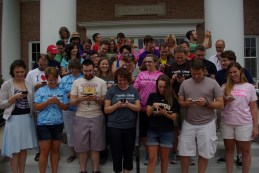
 I love Twitter Math Camp so much that I want to share it with everyone. And I want you to get to experience it, even if you couldn’t be there this year to experience it with me! Luckily, it is TWITTER Math Camp, so almost everything can be accessed online!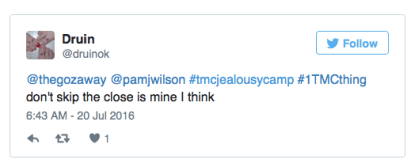
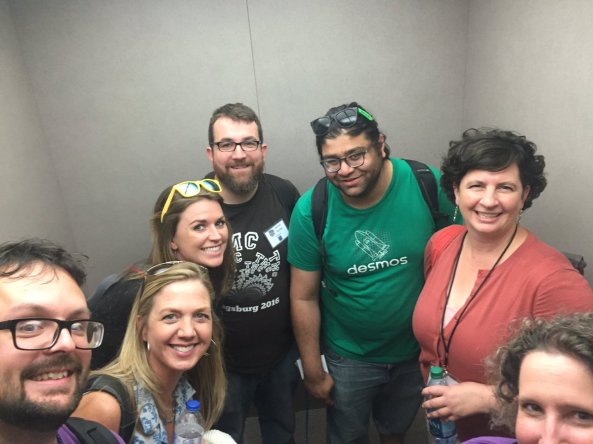
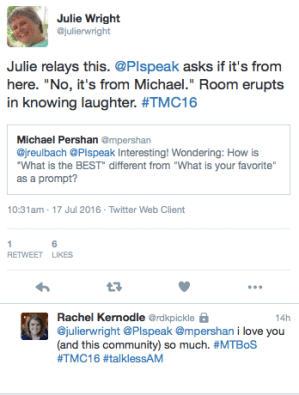
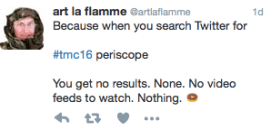 I saw a request on Twitter for Periscope so I decided to video some of the action here. I have never used Periscope so the first few videos are untitled, shaky, and turned the wrong way! But, I am getting better and hopefully sharing some of the TMC16 goodness with all of the wonderful math teachers that wanted to come but couldn’t this year.
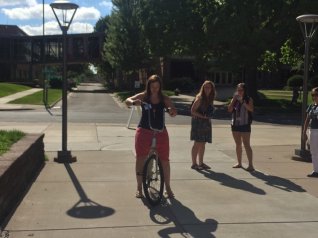 Everyday after the sessions,
  We ended the day with Math Trivia night hosted by Mathalicious. My team sang between rounds, Disney songs, Madonna, Sweet Caroline,… It was a blast,


 I Speak Math