Our Favorite Three of #TMC – Middle School Teachers Edition

I am still working on my #TMC13 recap.  I hope it gets finished (fingers crossed but no promises).  There is just so much to say and everyone else has already said it better than I ever could!

So for now, I am going to focus on the favorite sessions of some of the marvelous middle school teachers that attended #TMC13.  I believe we had well over 30 middle school teachers in attendance, out of 107!  That’s not only a great number, but a big improvement from the three middle school teachers we had last year.  So, I sent out an email to the educators that attended the Middle School Morning Session requesting their top three sessions (or “My Favorites”).  If you teach middle school, went to #TMC13, and want to add your 3 favorites, throw them in the comments!  🙂

Almost all material (lessons, Powerpoints, pdf’s) can be found on the Twitter Math Camp wiki.

Justin Aion, @justinaion
http://mraion.edublogs.org

  1. Problem solving in MS session run by the beautiful and brilliant Fawn (be still, my nerdy heart). Fawn did a wonderful job giving examples of problems that could solved in multiple ways for middle and high school students.  After working in small groups, she encouraged us not to discuss the answers, but rather our methods, explaining them in simple terms and requiring us to examine our own thinking. I frequently ask students to explain their work to each other, but never to this extent.  It caused me to think about my goals in terms of skills rather than content.  Fawn made the argument, and I completely agree, that problem solving skills are some of the most important that we can foster at a young age.
  2. Glenn Waddell, Jr. session on Problem Posing took an interesting tack on a mundane subject.  Often, we are told to find more interesting problems in order to help students understand abstract concepts, but Glenn’s review of The Art of Problem Posing flipped that concept on it’s head.  He, and the book, advocate taking very basic problems, breaking them into their attributes, modifying only attribute at a time and then examining the results and making generalizations.  All too often students can solve 2x+1=5 without a problem, but 2x+3=5 will send them into fits of panic and distress.  By generalizing how a certain attribute affects the outcome of a problem, students are able to break things down into simpler terms and, hopefully, relieve some of their math anxiety.
  3. The Lesson Plan writing session by Karim from Mathalicious provided me with a framework from which I could develop my own rich, applicable lessons.  One of my shortcomings as a teacher is in lesson planning, partly because I need a framework in which to create and a rubric in which to do self-evaluation.  By demonstrating how the Mathalicious team creates their lessons and then leading a discussion about that process, I was able to put my own lesson goals into their model and use it a jumping off point.  The ensuing discussion with other teachers and Karim also helped to clarify goals for a particular lesson.  If the goal is discovery of a topic, the teacher would ask very different questions of the students than if the goal were depth and application.

Adrienne Shlagbaum, @shlagteach
http://shlager.wordpress.com

  1. My Favorites: 4 to 1 – As a lover of all things whiteboard, Jen Crase’s favorite was right up my alley! Students simultaneously solve questions, each answering in one of four sections on the board. The sum of the responses is then recorded in the center box. Simply check the center box. Groups with an incorrect sum work together to find and fix the error. What an awesome way to engage all students in practice!
  2. MS Math Session – Aside from making some great connections and meeting some incredible people, my biggest take away from the session (thanks, Fawn!) was the importance of incorporating problem solving into the classroom routine and not making it an afterthought. Relevance to the current concept or topic not required!
  3. I Notice, I Wonder – Who knew that two little questions could lead to such rich discussion?! Max demonstrated that regardless of the simplicity or complexity of the problem, everyone has something to contribute. Furthermore, by recording every response, everyone’s ideas are valued. Use at the beginning, middle or end of a task, and is a rich feedback opportunity.

Mitzi Hasegawa, @mmhasegawa

  1. Max Ray’s presentation ” I notice…..I wonder….. “
  2. Fawn Nguyen’s problem solving and the game of Set.  I wasn’t able to attend the session where she introduced the game, but found an app.  I’d love to read anyone’s notes/blog to hear what she had to say and how she uses it in her class.
  3. Ashli Black’s from numbers to variables with number lines–fantastic stuff!

Lydia Kirkman @lydiakirkman
Blog – coming soon!

  1. Max’s “I notice, I wonder” – even if they have no idea how to solve a problem, EVERY student can notice and wonder.
  2. Megan’s INB session – I’ve used math notebooks for the past few years but Megan’s hints, tips and suggestions have made me so excited about the power student’s notebooks can have. I can’t wait to try out her ideas and to collaborate with others on #inbjamboree!
  3. Fawn’s problem solving! – Thanks to her I’m determined to have problem solving take a front position in my classroom this year! Looking forward to incorporating Mathalicious and Math Forum resources!

Judy Keeney, @judithkeeney
www.3yellowsandpails.com

  1. MS morning sessions: The small group break out sessions-where we could dig into an interesting topic. Would have loved to have had a bit more time.
  2. Number Lines with Ashli Black. The push to move into variables and support for kids to experience variables at a more concrete level.
  3. Christopher Danielson’s talk on 5 Practices for Orchestrating Productive Mathematics Discussions. It was great to participate in a session about a practice that I use (and have for awhile), and have my thinking stretched about other possibilities.
  4. Fawn’s problem solving-the tasks, the protocol she uses with kids—fabulous
Raj Shah
  1. Problem Solving with Fawn
  2. Notice & Wonder – Max Ray
  3. Two my favorites — Chris Lusto What is a… Circle & Three kinds of questions, David Wees, questions that stop thinking, proximity, and start thinking.

Julie Reulbach, @jreulbach, Me!
http://ispeakmath.org

  1. Middle School Morning Sessions.  This was a win-win for me!  I worked in a fabulous group and the fabulous Eli from Desmos even taught us (well maybe just me) some physics. I loved Problem Solving in MS Session with Fawn.  She is my hero and I just want to visit her classroom for a month so I can be less sucky at problem solving. I’m still scared to death but encouraged to try after being with her for two mornings.  I loved that she suggested giving them manipulatives when problem solving.  We also got to hear Chris Danielson speak about what student’s will need for Calculus.  He is absolutely amazing. I feel I got so much out of these sessions but needed still more time!
  2. Ashli Black’s variables on the number line.  I currently use a blank number line at the beginning of 6th grade for fractions.  Putting variables on the number line is a perfect next step and a great extension of the previous activity.  I also liked how much discussion there was in this hour and makes me rethink about cramming too much into an hour!
  3. Mathalicious MS – I did a Pizza Project Pilot with them this past spring and my student ate it up so I couldn’t pass this up.  I still can’t stop thinking about ice.  But even more crucial was that we though about how we would plan the lesson before we saw how they planned it.  I felt that gave me much more depth than just reading how they did it like I usually do!   I need to remember this when lesson planning.
  4. My Favorites – I had THREE favorites!  Jen Crase’s Four Boxes.  I play this currently (and call it Add It Up) but she had two extra elements that were very interesting.  One was that she put all the questions on a ppt instead of on a worksheet.  That saves me time and paper!  Two, she labeled the boxes from one to four and assigned kids numbers according to problem difficulty.
    AND Anne and her terrific, “SHUT UP AND LISTEN!” Which I never do bc I’m either talking or singing all of the time.
    Ok, so I can’t count.  But I also can’t leave out Nicole Paris and her orangemellows. I talk about not making apple bananas all of the time but it never occurred to me to have students put them in a bag together and shake them up. Duh.

TURBO – Fun Conversion / Percent Problem

We just went and saw the movie Turbo.  Thank goodness for the math going on in my brain, otherwise I don’t think that I could sit through ONE MORE animated movie.  Anyway, at the beginning of the movie, it takes the little snail, Turbo, 17 minutes to go 36 inches.  At the end of the movie, he is moving at 226 mph.  I have the beginning video to show my students, but I can’t find a clip where Turbo goes around the track and lights up the 226 mph.  I’ll probably have to wait until the movie comes out on DVD, but that’s ok as we don’t do conversions for a while.  I wanted to go ahead and blog about this now though so I don’t forget!  Kids love when I bring movie clips into class, so I think they will have fun with this.

The Plan:

    • Show the 36″ in 17 minutes video clip.  The first 30 seconds.
  • Show the 226 video clip (once I find it).
  • Ask them what they notice and wonder using Max’s awesome Notice/Wonder form!
  • Discuss their noticing and wonderings, then formulate what we want to know.
  • Get down to the math in groups.  I’ll let them work on their own silently for a few minutes, then have them get together to discuss and help each other. (Thanks Fawn)
  • I may even play “That Snail is Fast”, just because.

The Math

  1. I would like for them to investigate how many miles per hour the 36″/17 minutes equates to.
  2. How much faster is the snail going (percent increase).  My student often have trouble doing percent increase when it is such a large percent.  This will be great!
  3. Anything else they come up with.
  4. I’m curious is 36″/17 min is how fast a snail actually goes.  I bet googling that will lead us to more conversion problems.
  5. I’m still working on follow-up / extension ideas.  So if you have any, throw them in the comments!

TMC13 Session Recaps – Tonight on Global Math!

If you are tragically upset that you could not attend TMC13 (Twitter Math Camp), or going through post-TMC withdrawal symptoms, fear not!  Tonight, at 9PM, EST, multiple teachers will be talking about sessions that they presented or attended.

July 30: Twitter Math Camp Session Recaps

Screen Shot 2013-07-30 at 9.59.55 AM

Also, read Ilana Horn’s Storify story, What’s all the fuss about #TMC13?

Come tonight to relive the most amazing math teachers conference of all times!  I’ll see you there!

Julie

Exploring the MathTwitterBlogosphere

Coming in October 2013!!!

This year, we’re going to be holding a updated version of the Math Blogger Initiation that happened last year! We were crazy surprised by how many people were interested in joining up and trying something new — blogging with other math teachers! This year, we are planning to have a slightly different program for people to join called EXPLORING THE MATHTWITTERBLOGOSPHERE.

We’re designing it to help those who are either just starting out with the mathtwitterblogosphere and for those who have dipped their toes in and want to get even more involved.  Or even if you have dropped off the face of the virtual planet and want to join back in!

Each week we will post a new adventure for you to participate in involving the online math teacher community. And we are planning a virtual reward for those who participate in every event! However you don’t have to participate every week — you have to do what’s good for you. By the end, we hope you feel like you know much of what’s out there. Ultimately, the end goal is personal growth (not comments and blog readership).

Join us on this exciting adventure!  Meet new friends!  Get tons of new ideas!

So y’all can start school smoothly, we’re going to be starting this in October, and we’ll release more information in mid-September.

Let the fun begin!

Julie, Justin, Sam, Tina

1001079_10151549528141850_1483021589_n

Area Formula Game – Draw It!

My students love this!  And, it gets them up out of their seats.

The students are in two teams, lined up sitting in chairs.  The first person of each team goes to the board with a dry-erase marker in hand.  At the top of the Powerpoint I post a question.  The first person to (legibly) write the answer in their spot wins the point.  I usually play this with Geometry and they draw pictures so I called it “Draw It”.  I think I made this up but I can’t honestly remember.  🙂

This is hard to explain so today I made a video of some of my students playing it.  These amazing students volunteered to come in during their recess to play for me!  Did I mention how much I love 6th grade!  

Draw It Game Video Example on YouTube


The ppt is also on Slideshare.

Our Supplies – What’s In Your Cabinets?

This week we are blogging about our favorite math class supplies!  Enjoy!

We Are Hiring – Come and Work With Me! (near Charlotte, NC)

My small private school is GROWING!  Woodlawn School is an amazing project-based learning K – 12 school only 20 minutes away from downtown Charlotte, NC in the college town of Davidson, NC.  The class maximum is 16 students per class.  I’ve worked at public, charter, and private schools.  It’s the most amazing place I’ve ever worked!  We are hiring the following positions.

  • Middle/Upper School Math Teacher – Woodlawn seeks a full time math teacher for the 2013-2014 school year to teach the following courses: Algebra I, Algebra II, and Discrete Math. The successful candidate will possess a degree in math and have a minimum of three years teaching experience.
  • Middle School Science Teacher – Woodlawn seeks a full time science teacher for the 2013-2014 school year to teach 7th and 8th grade science courses. The successful candidate will possess a degree in science and have a minimum of three years teaching experience.
  • Middle School Language Arts Teacher
    Woodlawn seeks a full time Language Arts teacher for the 2013-2014 school year. The successful candidate will possess a degree in English and have a minimum of three years teaching experience.

Differentiation in Math Class – MS Sunday Funday

#msSunFunClick here to submit your MS Sunday Funday post!
This is not the first time that we have blogged about differentiation.  However, it is such a crucial topic that I’m excited to feature it again – especially since we are joining up with
Tina’s blog!  I am adding our previous posts to this list as well.
Next week our topic is “Supplies – What’s in Your Cabinet?” Please blog a quick list of your favorite math supplies (and why if you have time)!  This could be books, manipulatives, or even things like giant whiteboards!

MS Sunday Funday – Project Learning for the Common Core

#msSunFun

Click here to submit your MS Sunday Funday post!

Geoff Krall created amazing problem based curriculum maps that are aligned to the common core for Grade 6 – Algebra II.  On his blog, he requested more resources for middle school math, particularly 6th and 7th grade.  This week, we are blogging about problem or project based lessons.  I added the CCSS to my blog title.

If you have a post for this week – please add it.  Right now, there is just the two of us.  🙂  Next week we are blogging about differentiation in math class.

Student Created Math Hunt of Area of Irregular Shapes: CCSS 6.G.1

I racked my brain for at least a week trying to come up with something interesting for this.

CCSS.Math.Content.6.G.1 Find the area of right triangles, other triangles, special quadrilaterals, and polygons by composing into rectangles or decomposing into triangles and other shapes; apply these techniques in the context of solving real-world and mathematical problems.

I had a few worksheets in my files on finding areas of irregular shapes.  Boring.  I even had a Math Hunt that I created last year (from a similar worksheet.  But, that was pretty dry as well, the only difference is they get to walk around the room.  It’s been a tough week, but these activities just weren’t inspiring me.

My students do love a good math hunt, but they also love being creative.  Also, I didn’t just want them to find areas, I wanted to have them do the higher level skill of finding unknown measurements if they are given the area.

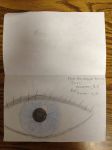
I decided to have my students create their own math hunt.  The instructions were:

  1. Fold a sheet of paper in half, creating a half sheet card.
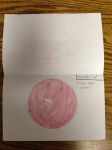
  2. Draw either a regular or standard shape on the bottom half of the inside of the card.  Decorate this shape however you want (make it something), and then color it with colored pencils.
  3. Give your card a title on the outside cover.
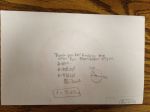
  4. Find the area of your shape on the back of the card (show all steps).

After the pictures were drawn and decorated and the areas found, they switched cards with a partner to make sure they were correct.  I ended up with cards in several different categories.

  • Find an unknown measure given the area.  These were for standard shapes like (circle, triangles, quadrilaterals)
  • Find the area of irregular objects
  • Find the area of an object where you have to subtract out another object.

After all of the cards were finished, I had students partner up and check each other’s work.  I created a partner check sheet for this to ensure that they were thorough.

Create A Shape Partner Check Sheet

I then taped them up all around the room.  Students moved around the room, and got to pick one card of each type to work.  After they worked one of each type, they got to try to pick one of each shape.  I also created a foldable worksheet for this so that they would not forget to pick different kinds of shapes.  Create A Shape Search WS

They enjoyed creating the cards and working with the other students creations as well.  Plus, they got a variety of practice on different aspects of area.

One drawback to this activity was that I did not get enough triangles and trapezoids.  If you do this activity, I would randomly assign students a shape so that you are sure to get a good variety.