I only had about a week to cover transformations so I focused on translations and reflections, and then briefly covered dilations. I used coordinate changes, where (x,y) transformed to (x +2, y-1) or (-x,y) as I feel that will benefit them in later Algebra classes as well. Michael Pershan’s created an excellent Tool for Exploring Transformation Rules using Desmos that I love. I gave my students the link and let them play with it. 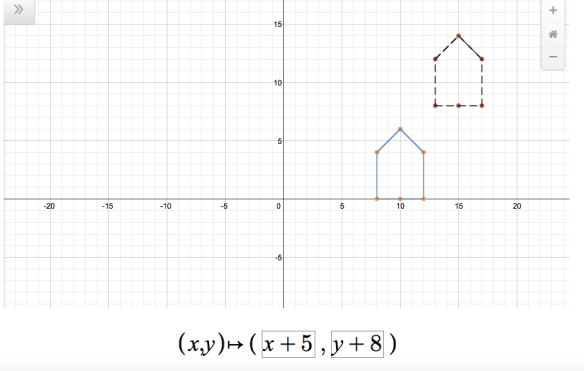
Then I had them take out the +5, and +8 so they only had (x,y). 
I challenged them to make the house FATTER. It took them a while to figure out they had to multiply a number instead of add. After they were all able to make very fat houses asked them to make it skinner, taller, and shorter. After that, I asked if they thought they could turn it upside down. The students enjoyed making the house different sizes and moving it around. But the best benefit came days later when I only had to mention the house to remind them how to differentiate between the translations and dilations in future work.
Here is the link to the Transformations foldable I created, using Kuta software for some of the graphs.


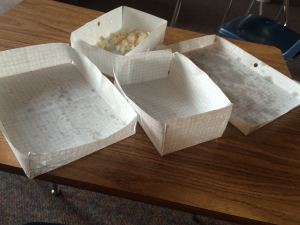 Thanks to Fawn, my students actually cared about making the maximum sized box out of their 8.5″x10″ piece of graph paper. If you don’t do this, you should! It was very easy and great fun! You will need to


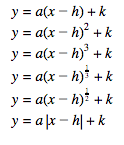
 The first discovery was also my students first introduction to graphing with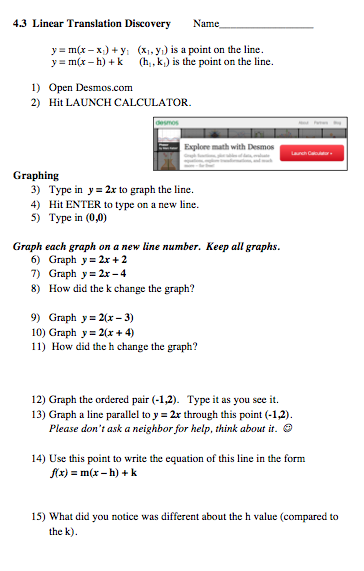


 I Speak Math