Turning Words into Math – Graphic Organizer

I made this graphic organizer to help my students quickly (and visually) reference the math symbols that words often translate into.  I had them glue it onto the back cover of their notebooks for easy reference.  The words are not centered on the page so that the paper can be easily cut down to fit onto spiral bound notebook pages.  The PDF file is below.  Thanks!  🙂

Words Into Math Graphic Organizer and Word Bank

Creative Commons License
I Speak Math Materials by Julie Reulbach is licensed under a Creative Commons Attribution-NonCommercial 3.0 Unported License.
Based on a work at https://ispeakmath.wordpress.com.

Picture Frames to Jazz Up Station Work

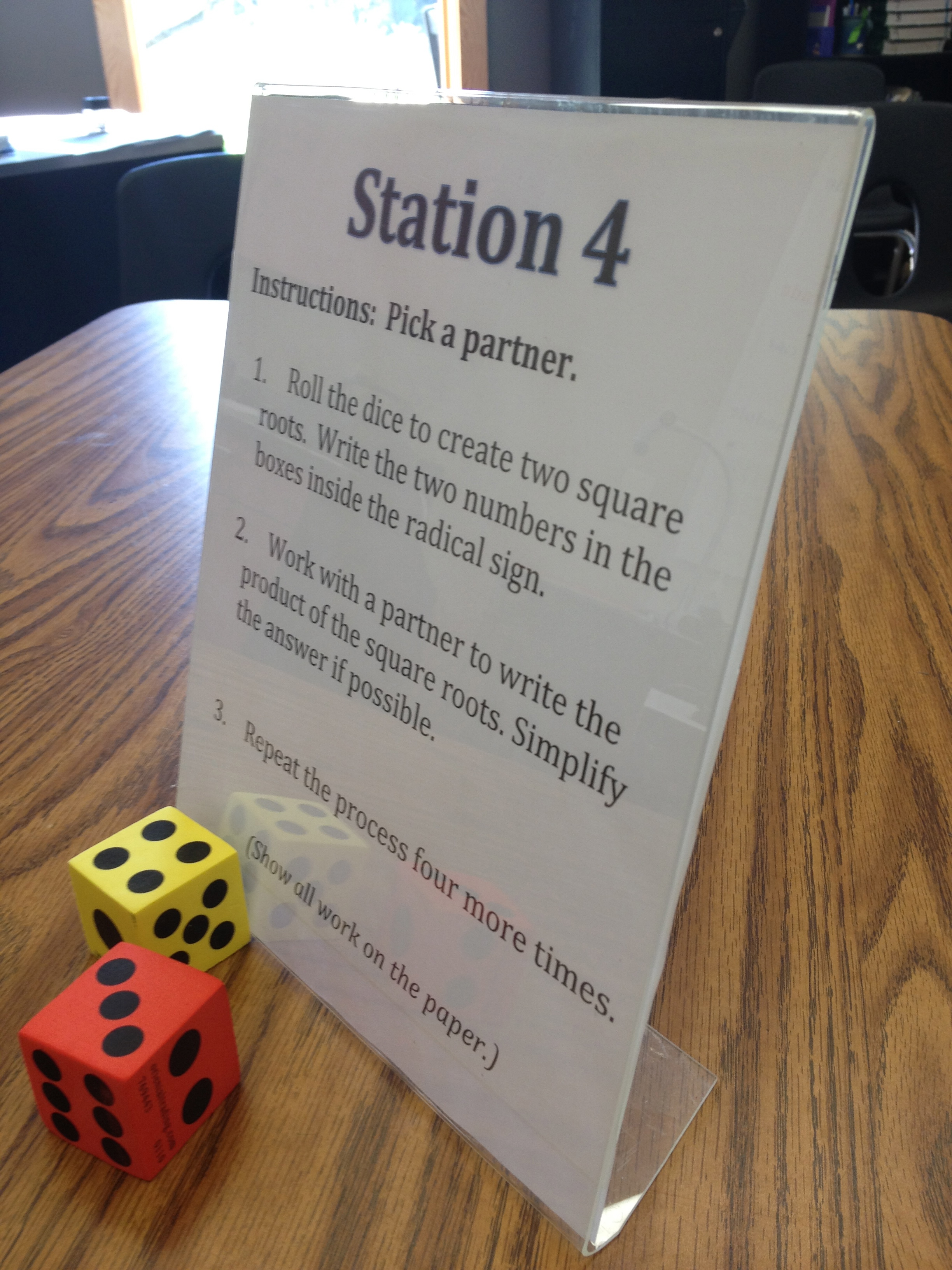
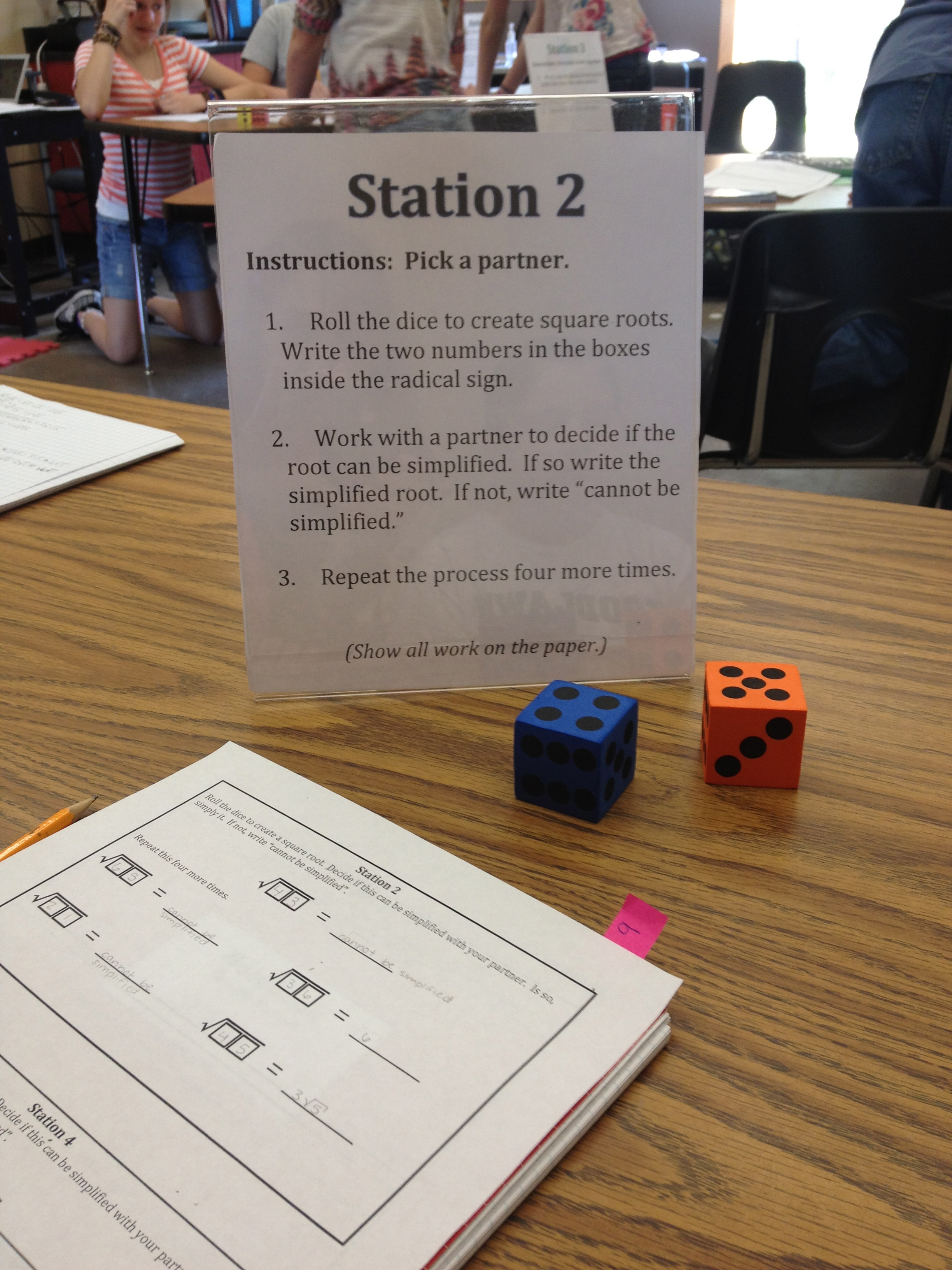
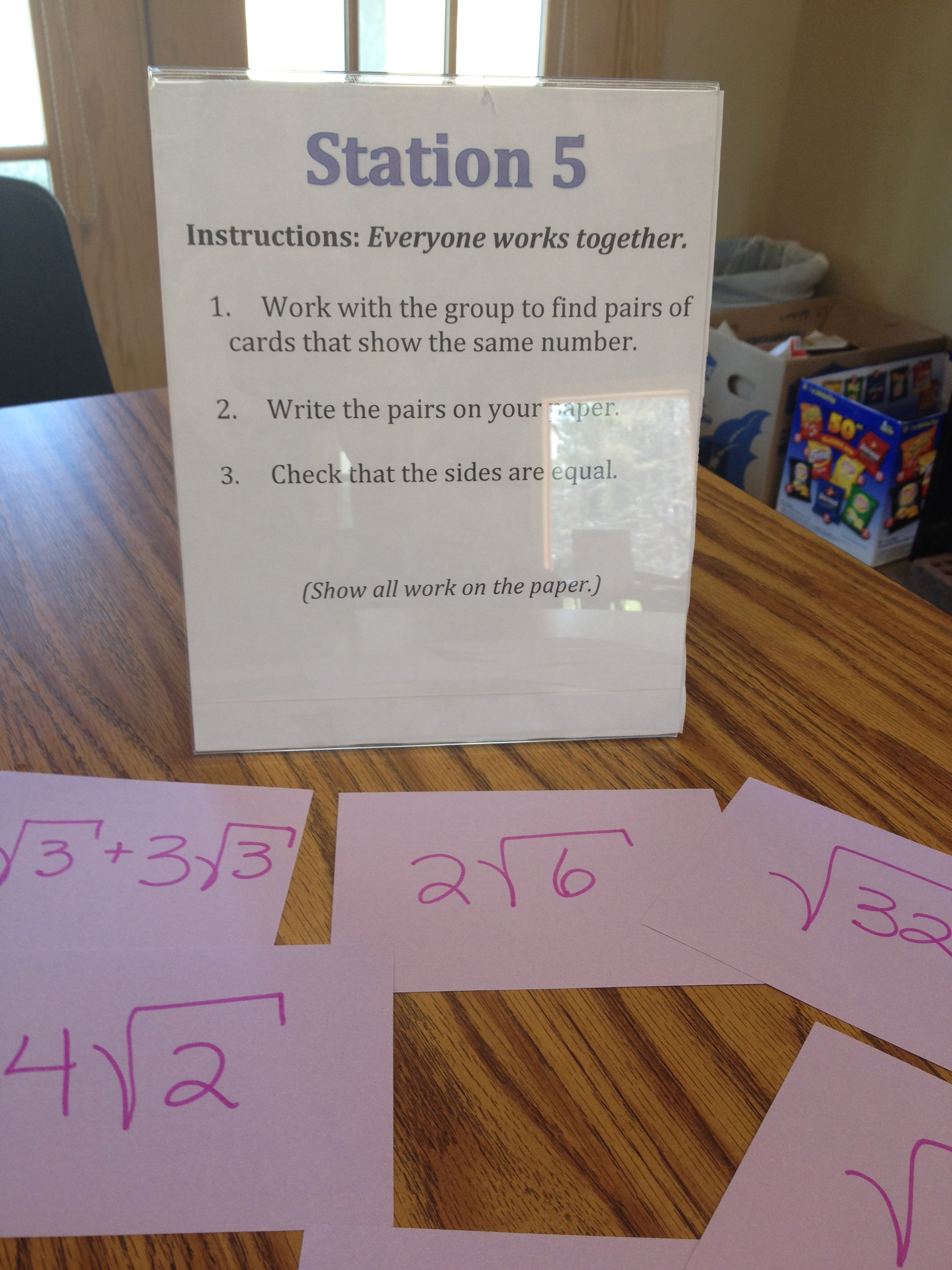
I can’t believe that I didn’t think of this before.  I used inexpensive, plastic picture frames to display instructions for each math station today.  They worked very well because they were so large.  Students could easily find the next station they were supposed to go to.  Also, the instructions were high up on the table so that everyone in the group could read them at the same time without leaning over and crowding.  Students actually sat down in their seats and then read the instructions.  The location also kept the instructions right in front of their eyes for easy reference.  Plus, it preserved my handouts which can get ratty pretty fast after a couple of classes of kids use them.

The kids were so funny as I heard comments like, “Wow, this looks so professional!”  I love them.

Tips:

  1. I color coded my station names to match my index card colors so I wouldn’t them mixed up.  And of course, giant foam dice make even ordinary math problems more fun!
  2. I made 5 stations but only assigned students to 4 of the stations.  Having an empty station really helped avoid any station overlap.  As soon as one group was finished, there was always an empty station to go to.  I like this better than timing stations and having everyone move at once because students can work at their own pace.

This station activity came from the book “Station Activities for Mathematics, Grade 8” by Walsch Publishing.  I have included a document that contains the Station signs I made as well as a one page hand-out for the students (to conserve paper).  I also combined two stations so that I had 5 stations instead of four.

Station Instructions – Simplify Square Roots    Station Instructions – Simplify Square Roots PDF

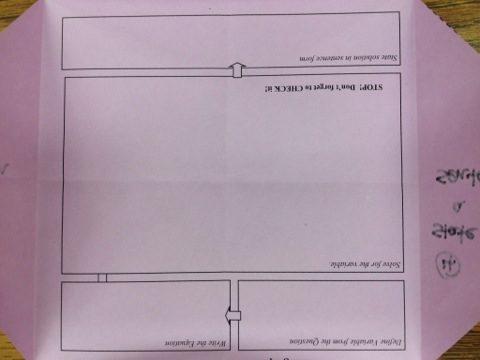
Writing Linear Equations from Word Problems – Foldable

6th and 7th grade students do not like to write equations for word problems. They just want to scratch out some calculations and give me their answer. Often, their answer is correct, but I would love for them to develop how to write an equation from a word problem at this level.

I made this four step foldable to visually slow them down, and illustrate the steps they need to take when writing an equation from a word problem. The students caught on very easily when I did this in class with them. For the first time, they seemed to realize that they needed to complete several steps in order to solve a word problem (by writing an equation). I emphasized the importance of the equation.

20120319-181658.jpg

20120319-181711.jpg

20120319-181720.jpg

This is the example that I wrote on the board to illustrate how to write an equation and solve it.

20120319-181726.jpg

PDF and Word File of the Foldable.

Sorry for the upside down picture!  I was trying to post using my iPad.  That app needs work!

Colorful, Differentiated Learning with Math Stations

Since I wrote my Marvelous Math Stations post last year, I have made a few improvements, taking Math Stations to the next level!

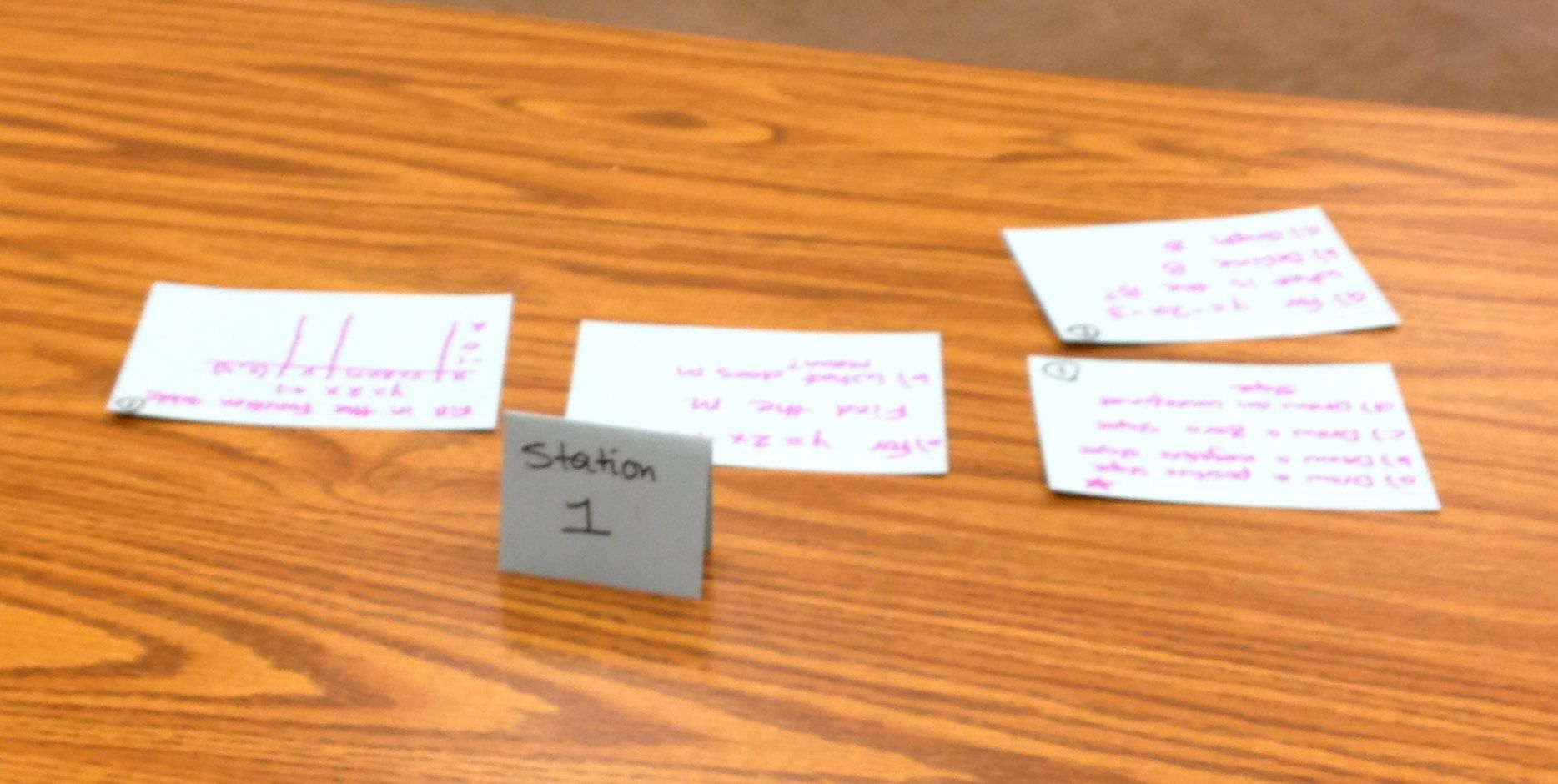
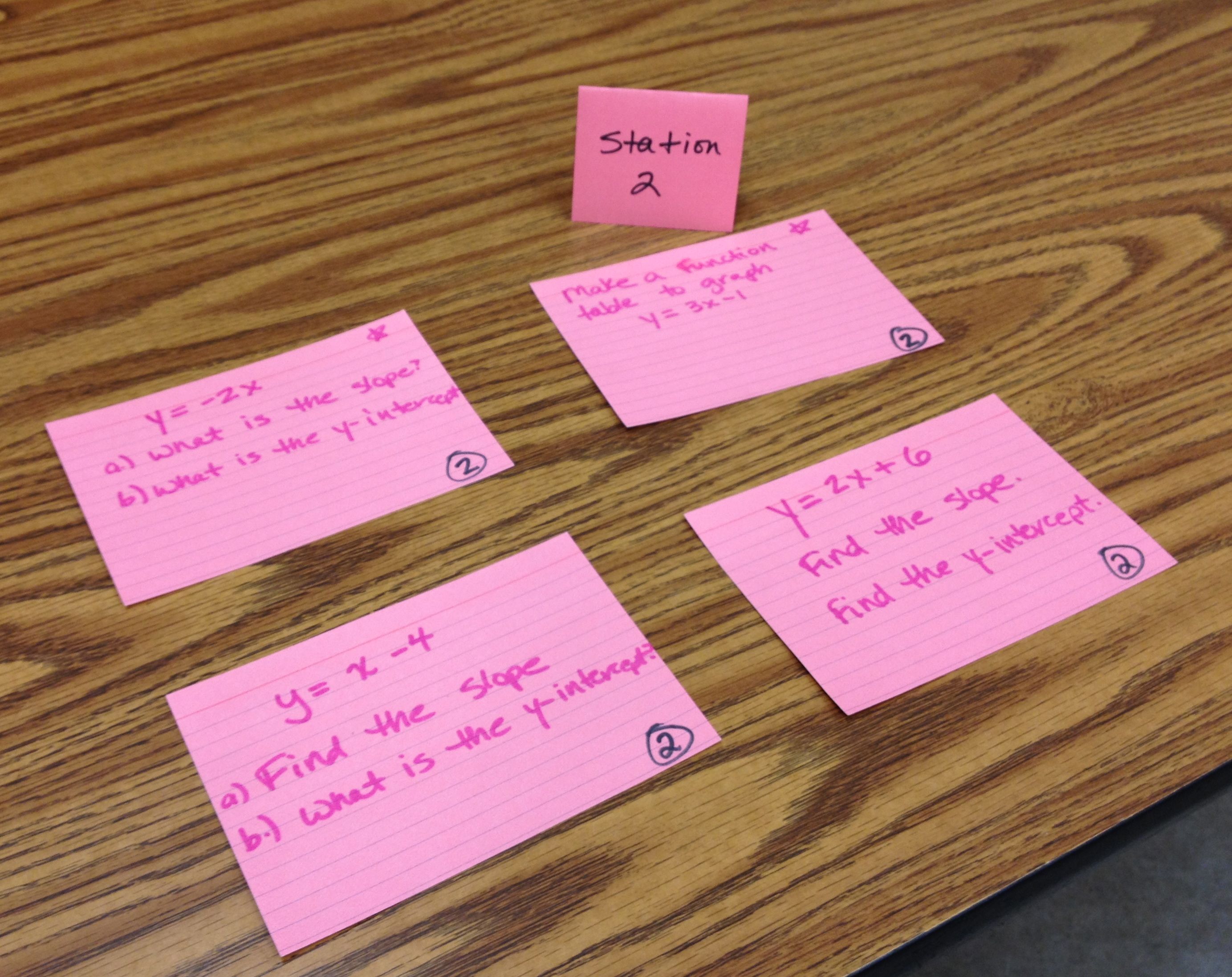
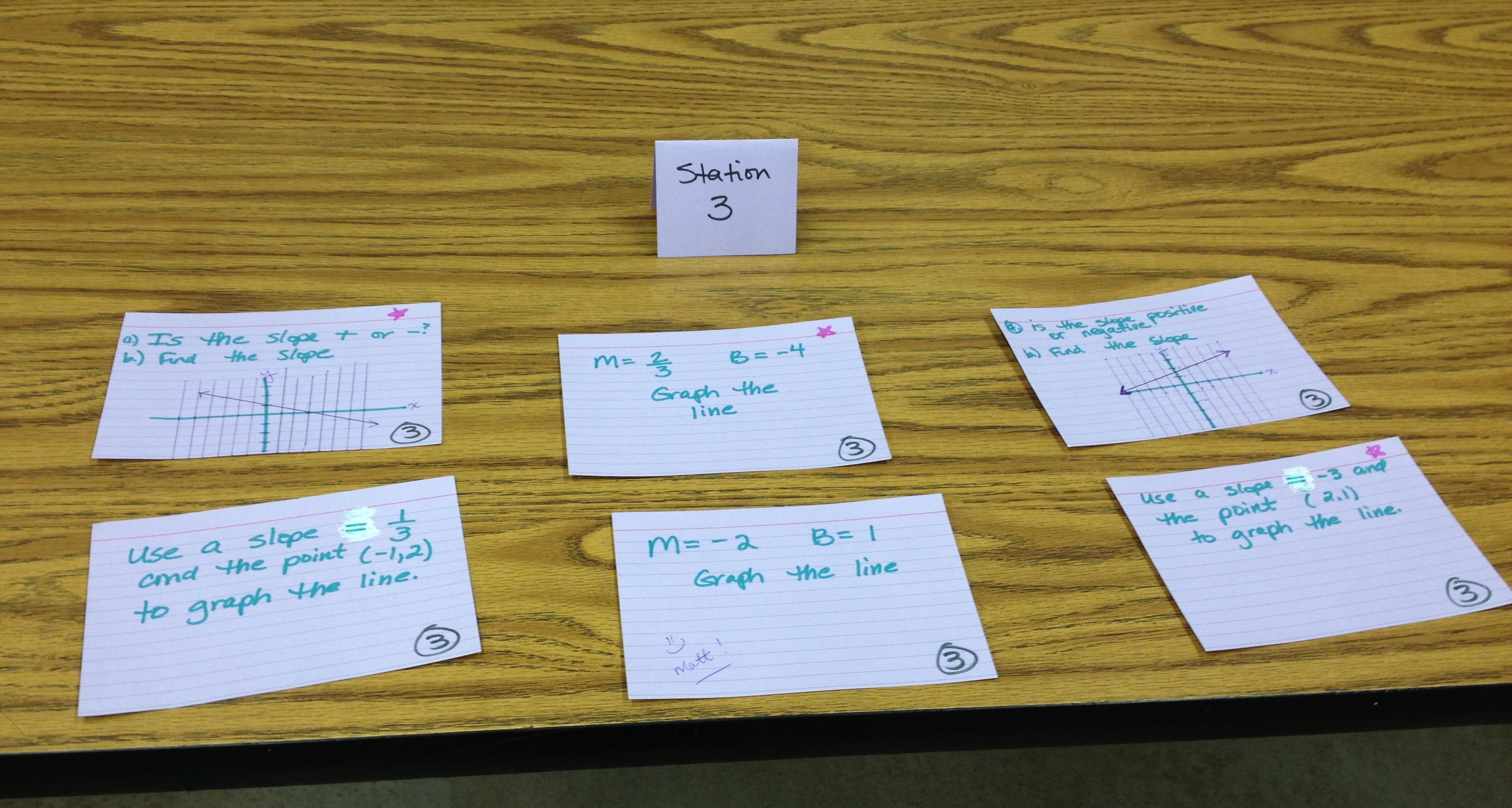
I differentiate learning by color coding. I use color index cards, one color per station, and then number the stations 1 – 5. Each station gets progressively more difficult that the one before.  I assign students that need more review to the lower stations, and more proficient students to the higher stations.  I usually assign them to stations 1 – 3 so they all have the chance to progress to more difficult stations.  Station 5, the last one, is always a “challenge” station.  I added more cards per station (about 6 cards) so there are more problems for the students to work.

  • I put a STAR on all problems that students are required to work at each station. The other ones are optional as time allows or if they feel they need more work with a topic.
  • I put the answers on the back of the index card. This way student can more easily check their answers.
  • I have them write down all of the problems, work, and answers in their notebooks. As they work the problems in their notebooks, they highlight ones they miss so they can focus on that type of problem when studying. I got rid of the math station handout because they had trouble keeping up with an index card or a tracking sheet.
  • I post the rules on a Powerpoint at the front of the room so that the students can read them as often as they need to.

My biggest advice is to make SURE they are writing down the questions and not just the answers in their notebooks. Also, keep encouraging them to highlight the ones they are unsure of.

Rules – (GDoc Presentation)

Smarties for My Smarties – After School Math Help Incentives

Once a week I offer after school math help for each subject.  After school math help is great because it’s a small group so I can focus on exactly what each student needs.  Students come to after school help if they have been absent and want to catch up (very needed in winter months), If they would like help on the current topic, or if they would like to do their homework with me.

Unfortunately, after an 8 hour school day, no one is very excited about after school math help.  In fact, I think I heard someone say, “Dreading it.”  So, I decided to spice it up a bit for the students (and myself) by adding a bit of after school sweets to after school help.  I figured if they decided to come to after school help, they deserved a little sweet treat!  Each student that comes to after school help gets a roll or smarties and a tootsie roll.  This may not sound like much, but it’s a fun treat at the end of a long day (and the beginning of 45 minutes of math).  The little bit of sugar gives us all just the edge we need to help our brains make it through 45 more minutes of learning.  But, it does more, with the addition of some music, a little candy makes it a lot of fun!  Today my fabulous 6th graders even talked me into a bonus – one single smartie for every question they answered correctly.  I had a blast with them, and they even came up with a cute slogan, “Smarties for Smarties.”
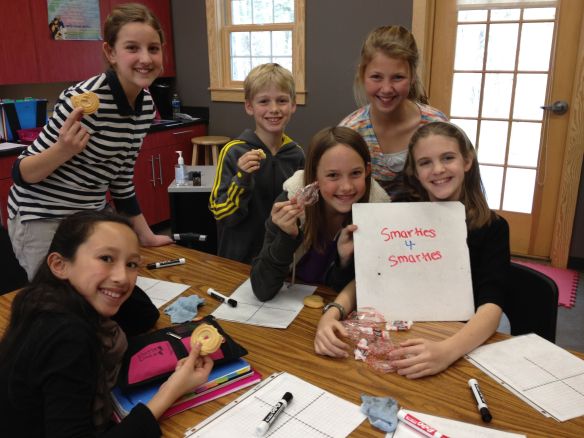
After school help today was FUN, the students were awesome, and I’m really looking forward to spending more Wednesdays with my amazing 6th grade Smarties.

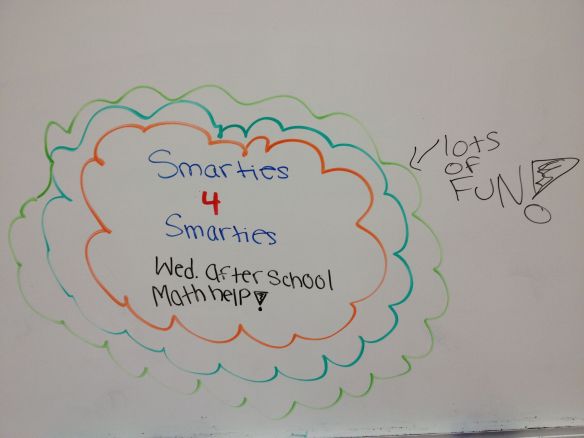
Update:  Today when I came into class this was on the board.  I’m just happy to know that my students enjoyed it too.  🙂
All about SLOPE Foldable

Yes, I am loving some foldables right now!  The kids love them too.  They get to cut, glue, hi-light, and write in little boxes.  Plus, when they are studying, they can just flip up and look at one concept at a time so they are not overwhelmed with an entire worksheet.  Nirvana.

I am coming up with them for review now, but next year I would like to introduce them when we initially take notes.  Then, the students could take the notes right on the foldable and not have to recreate (read – waste time) writing everything again in review.  This will leave more time for working on math problems in class – using the foldable as a guide of course!

Again, printing is the only tricky part to make sure it lines up well.  I also had the students put a small strip of glue behind the words “I can find Slope from” so it would have a sturdy header and flip better.

6th Slope Foldable – Editable Word File

6th-slope-foldable – PDF